> For the complete documentation index, see [llms.txt](https://docs.calk-ai.com/llms.txt). Markdown versions of documentation pages are available by appending `.md` to page URLs; this page is available as [Markdown](https://docs.calk-ai.com/knowledge/knowledge-hub.md).
# Knowledge Hub
Calk's knowledge management system allows you to connect various data sources and import documents to enhance your AI agents' capabilities. The knowledge system is organized into several sections accessible from the sidebar.
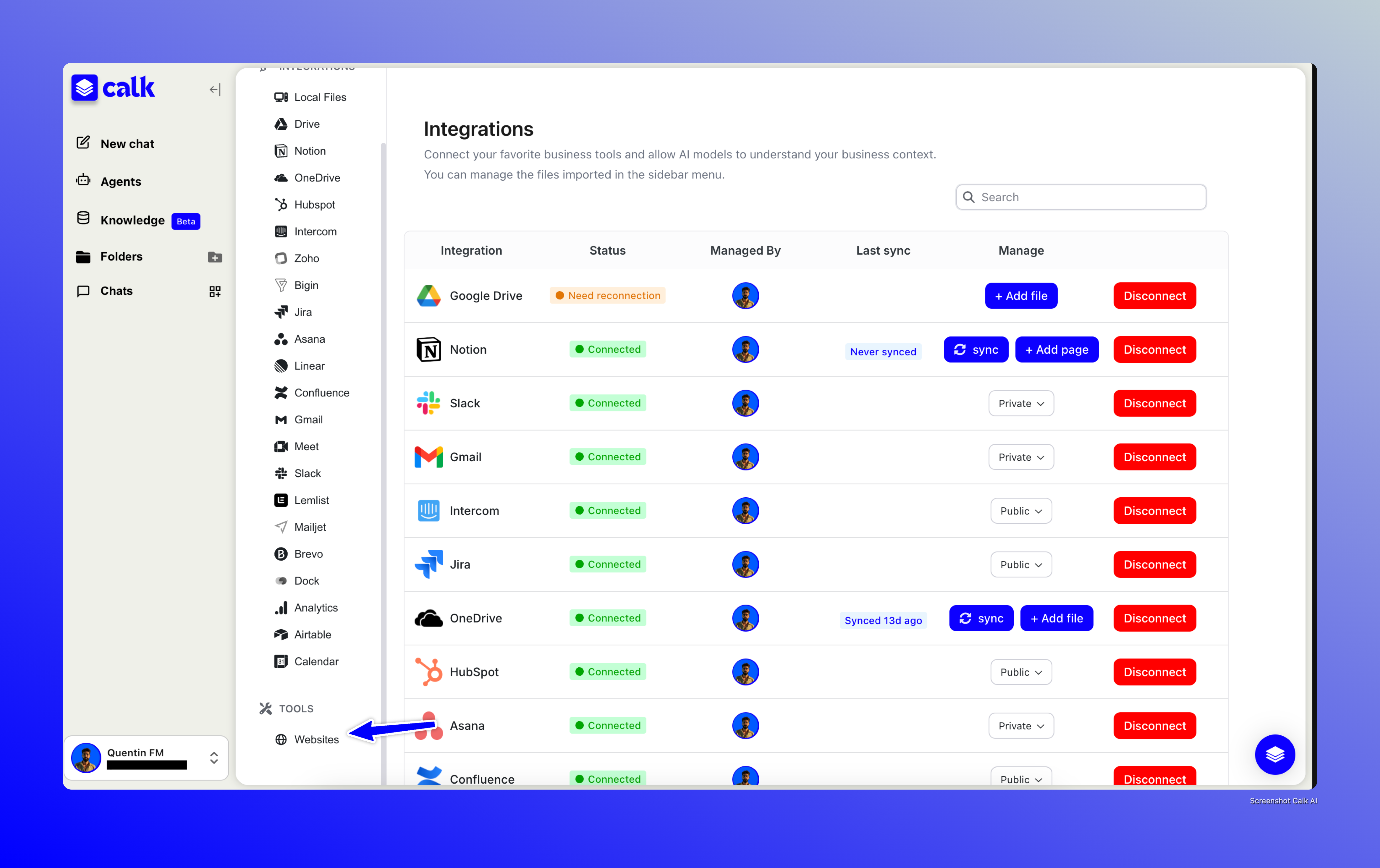
### Sources Overview
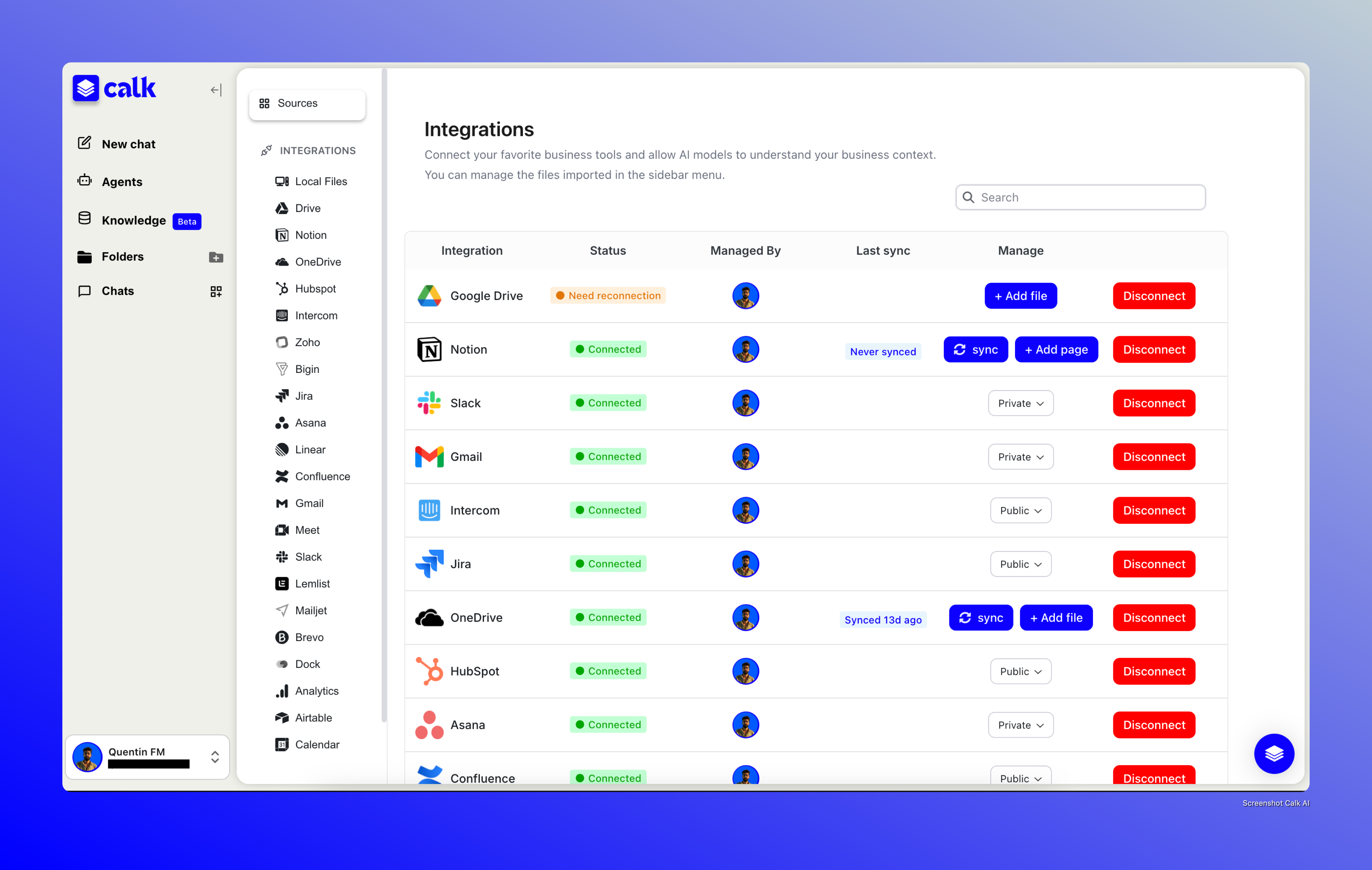
The main Sources page serves as your integration hub where you can connect and manage all your business tools and data sources. Here you can:
* View all available integrations with their connection status
* See which integrations are "Connected" with green status indicators
* Monitor last sync times and manage synchronization (for Notion and Drive only)
* Control privacy settings (Private/Public) for each integration. Setting an integration to “Public” will share your connection token / API key with the other users in your company, allowing them to also use the integration in question.
* Use sync buttons to manually refresh data from connected sources
* Disconnect integrations when no longer needed
### Local Files Management
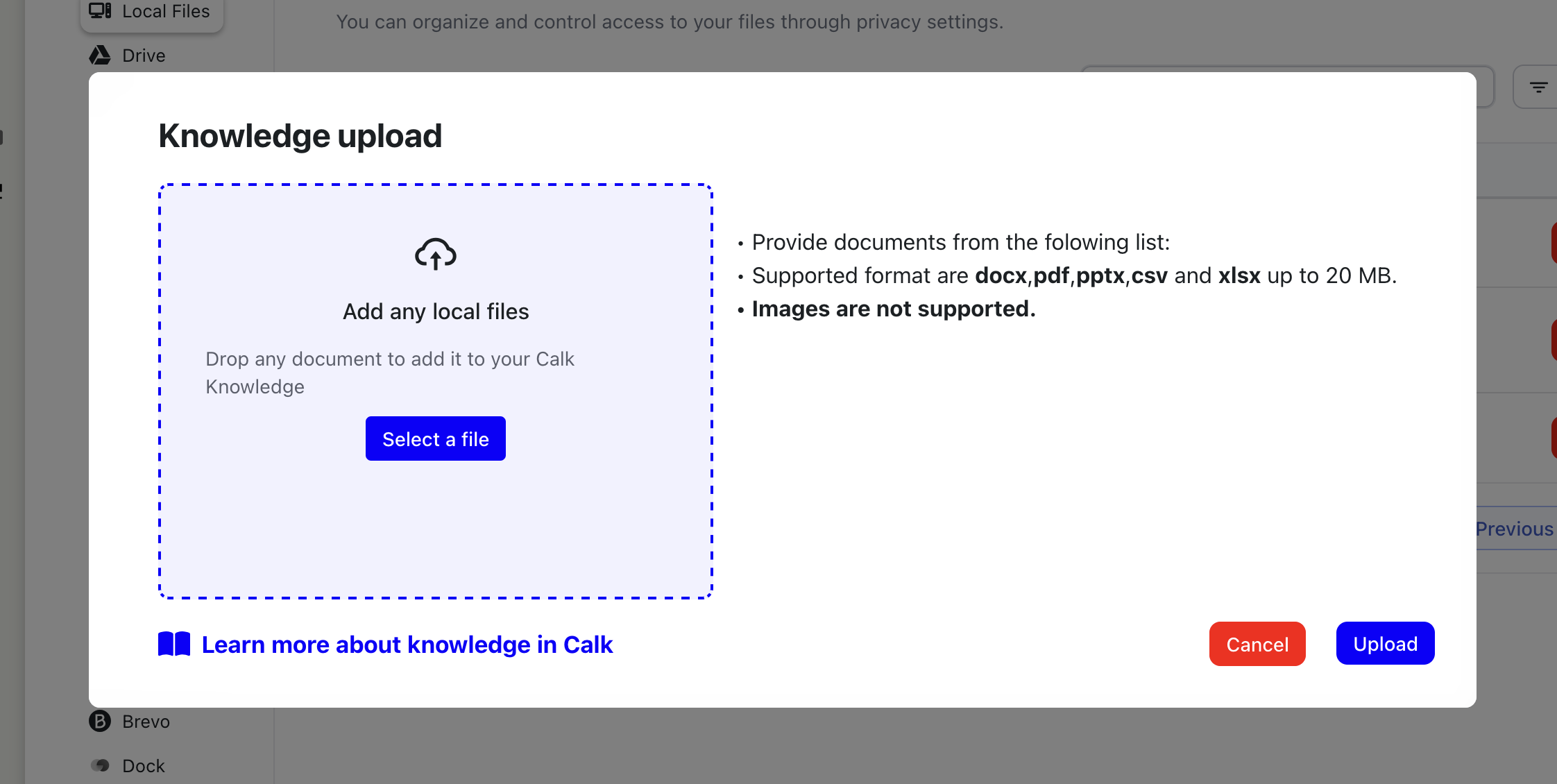
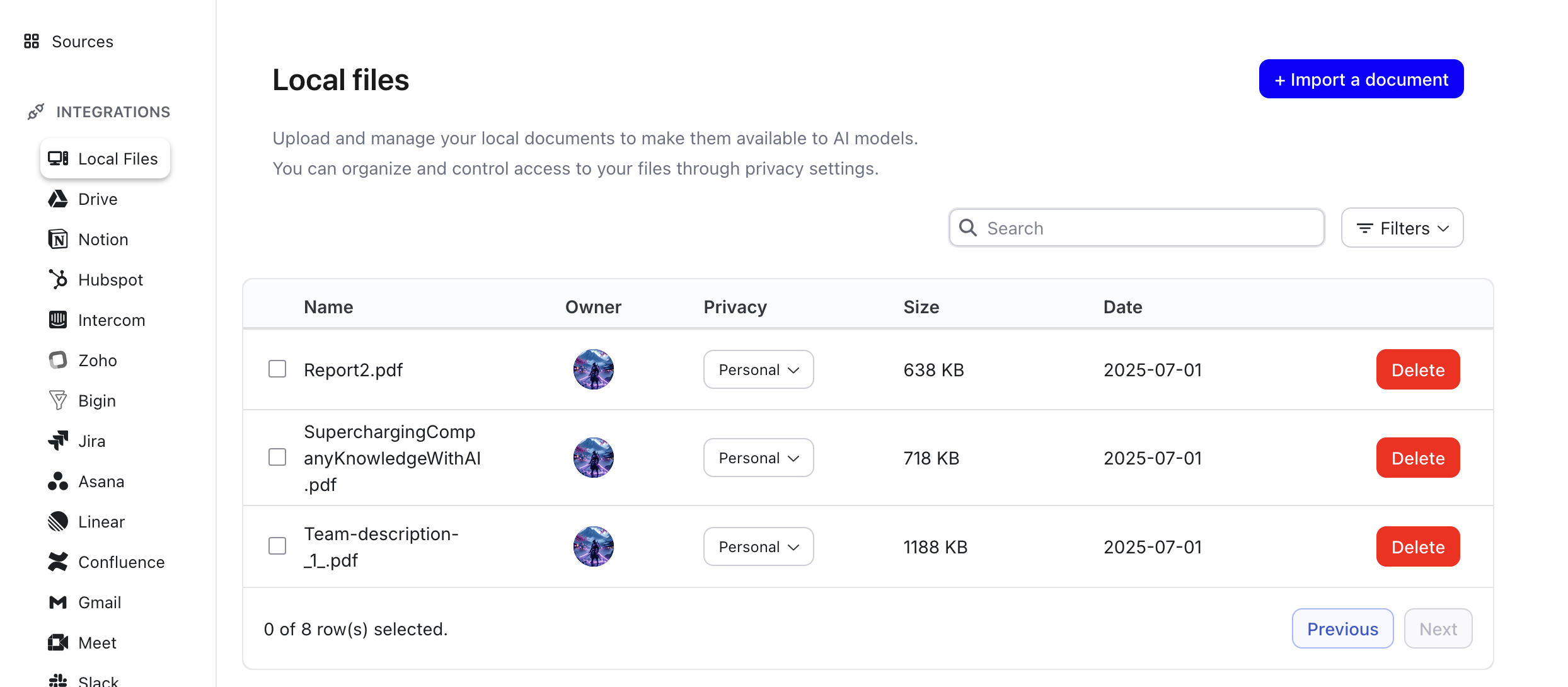
Upload and manage documents directly from your computer to make them available to your agents.
**Importing Local Documents:**
1. Navigate to the "Local Files" section in the sidebar
2. Click the "+ Import a document" button
3. Select files from your computer or drag and drop them into the interface
4. Files are automatically processed and made available for you to add them to your agents
**Managing Local Files:**
* **File Information:** View name, owner, privacy setting, file size, and upload date
* **Search & Filter:** Use the search bar and filters to find specific documents
* **Privacy Control:** Adjust privacy settings using the dropdown in the Privacy column
**File Limitations:**
* Maximum file size: 20MB per document
* Supported formats include PDFs, text files, and common document types
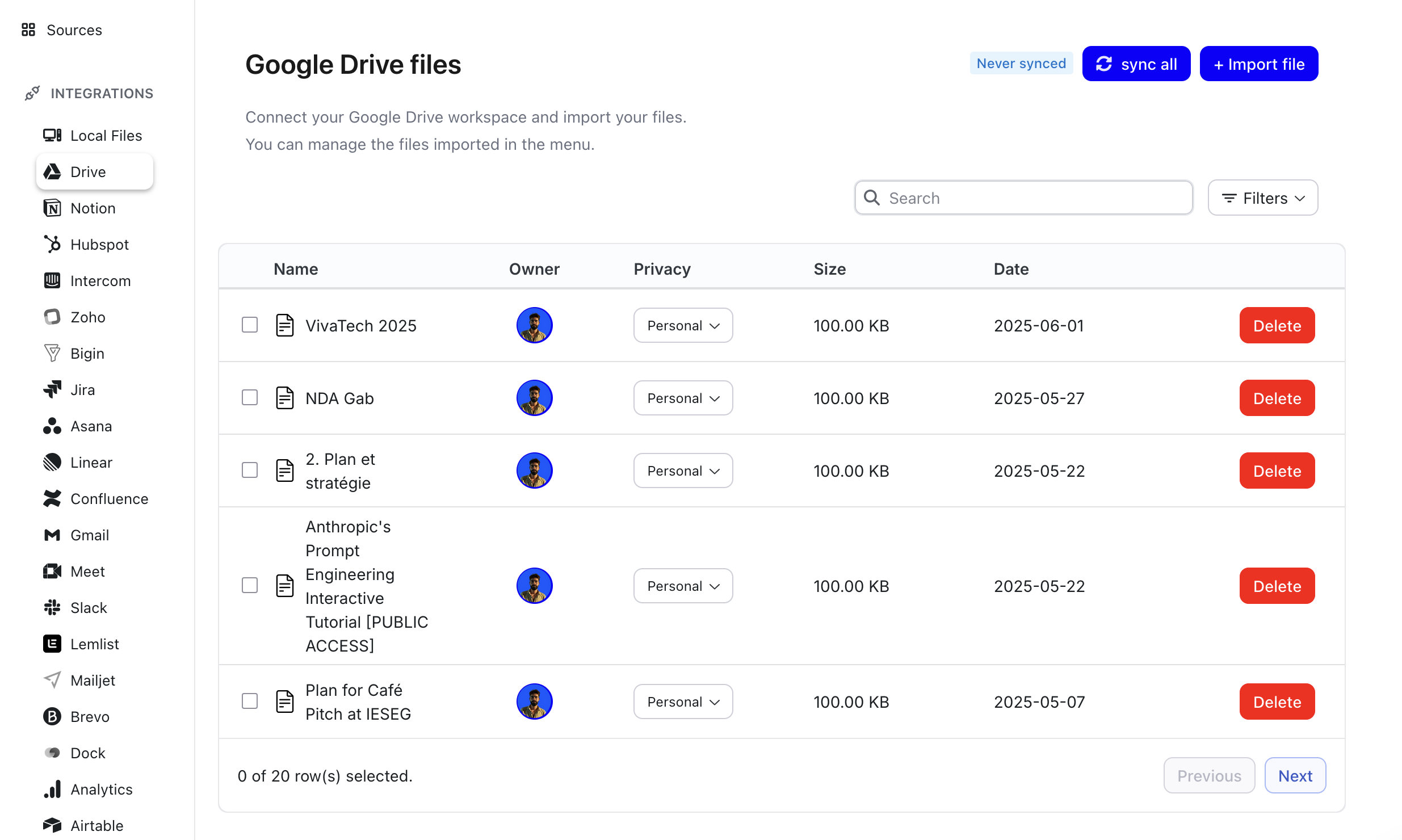
### Google Drive Integration
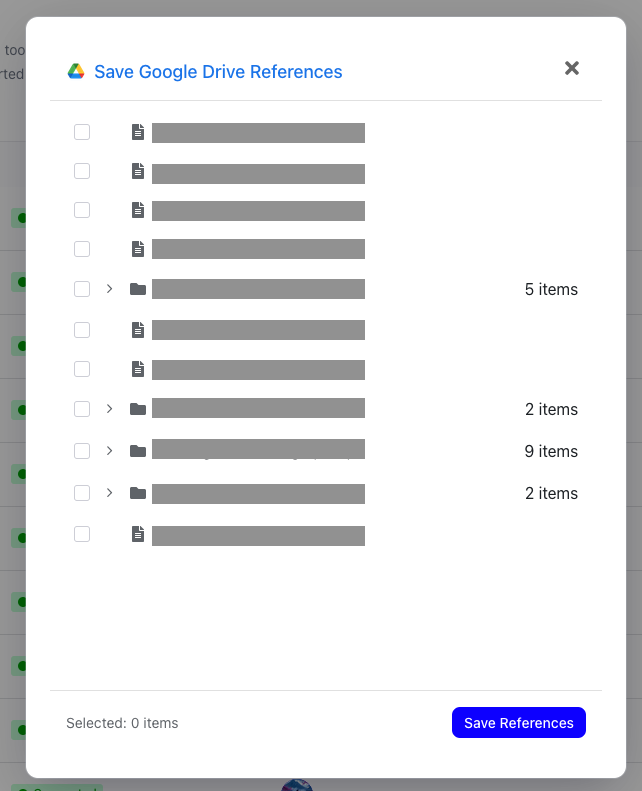
Access and import files directly from your connected Google Drive workspace.
**Managing Google Drive Files:**
1. Ensure your Google Drive integration is connected from the Sources page
2. Navigate to "Drive" in the sidebar
3. Use "Sync all" to refresh your file list from Google Drive
4. Click "+ Import file" to add specific files to your knowledge base
**Google Drive Features:**
* **Manual Sync:** Files stay up-to-date with your Google Drive
* **Selective Import:** Choose which files to make available to AI models
* **File Management:** Same interface as local files with privacy controls and search
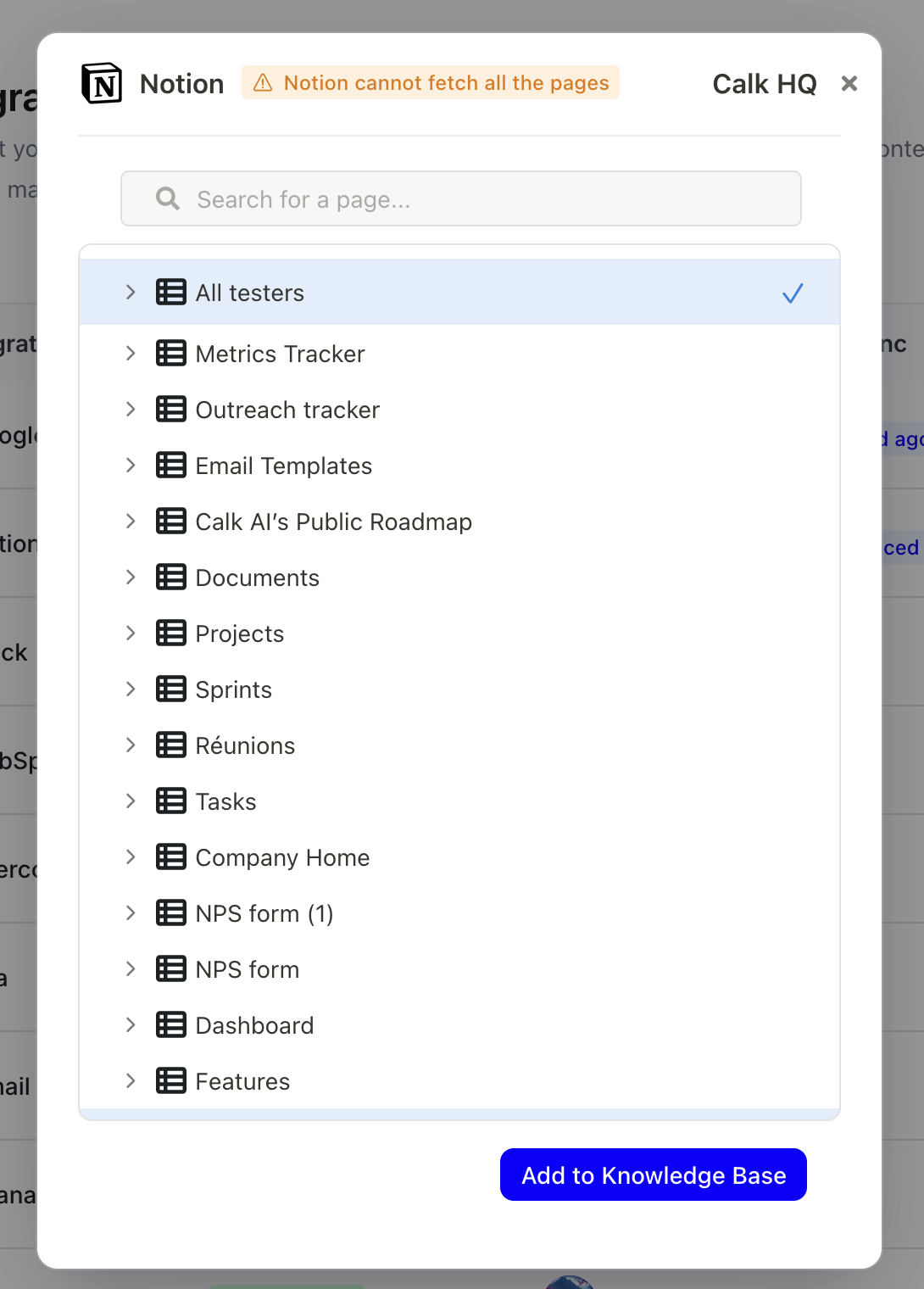
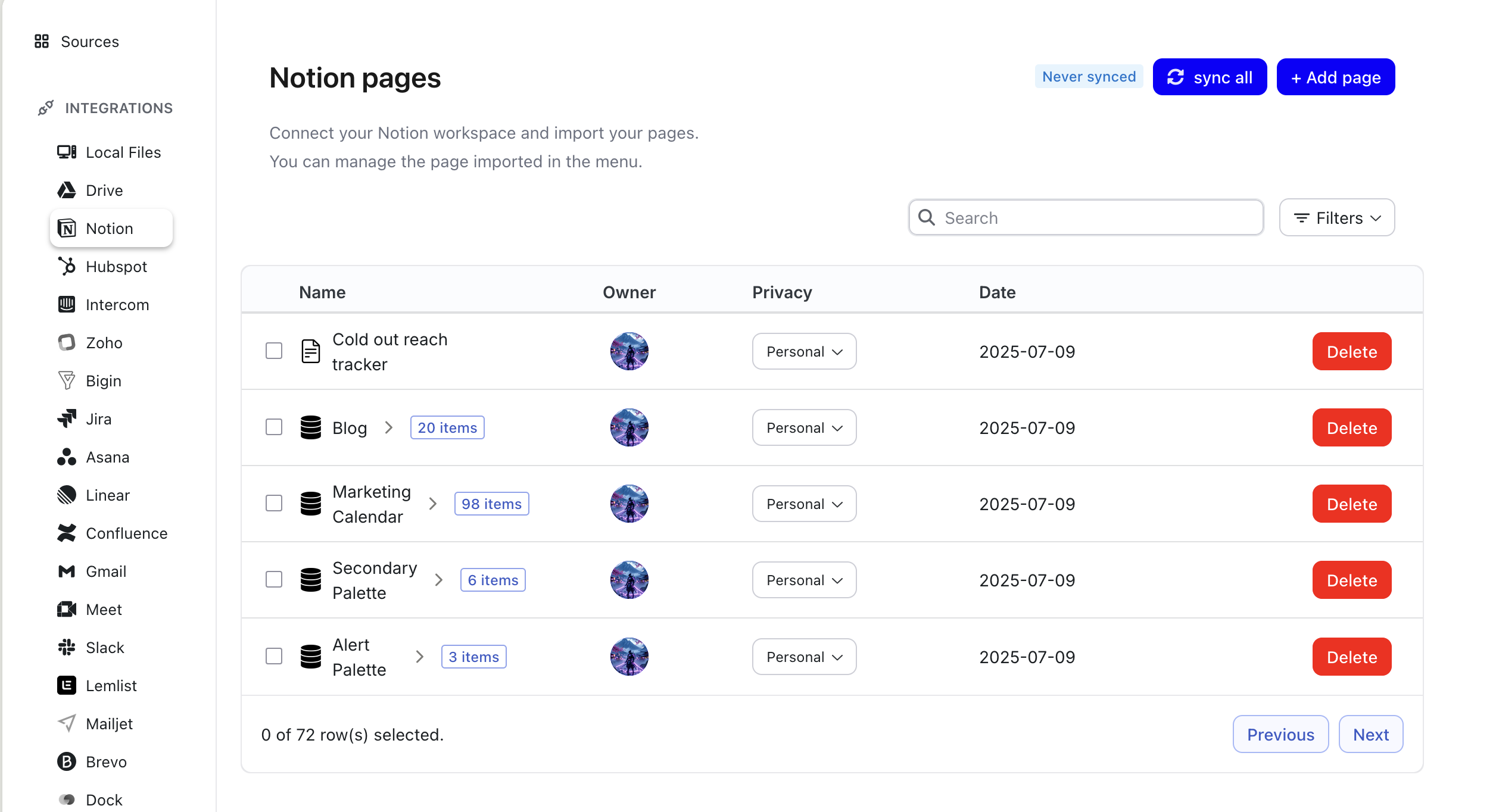
### Notion Integration
Connect your Notion workspace to access pages and databases.
**Managing Notion Content:**
1. Connect your Notion workspace from the Sources page
2. Access "Notion" from the sidebar to view available pages
3. Use "Sync all" to refresh content from your Notion workspace
4. Click "+ Add page" to import specific pages or databases
**Notion Features:**
* **Page Organization:** View Notion pages with hierarchical structure
* **Database Access:** Import Notion databases and their content
* **Content Sync:** Keep Notion content updated with regular synchronization
* **Privacy Controls:** Manage access permissions for imported Notion content
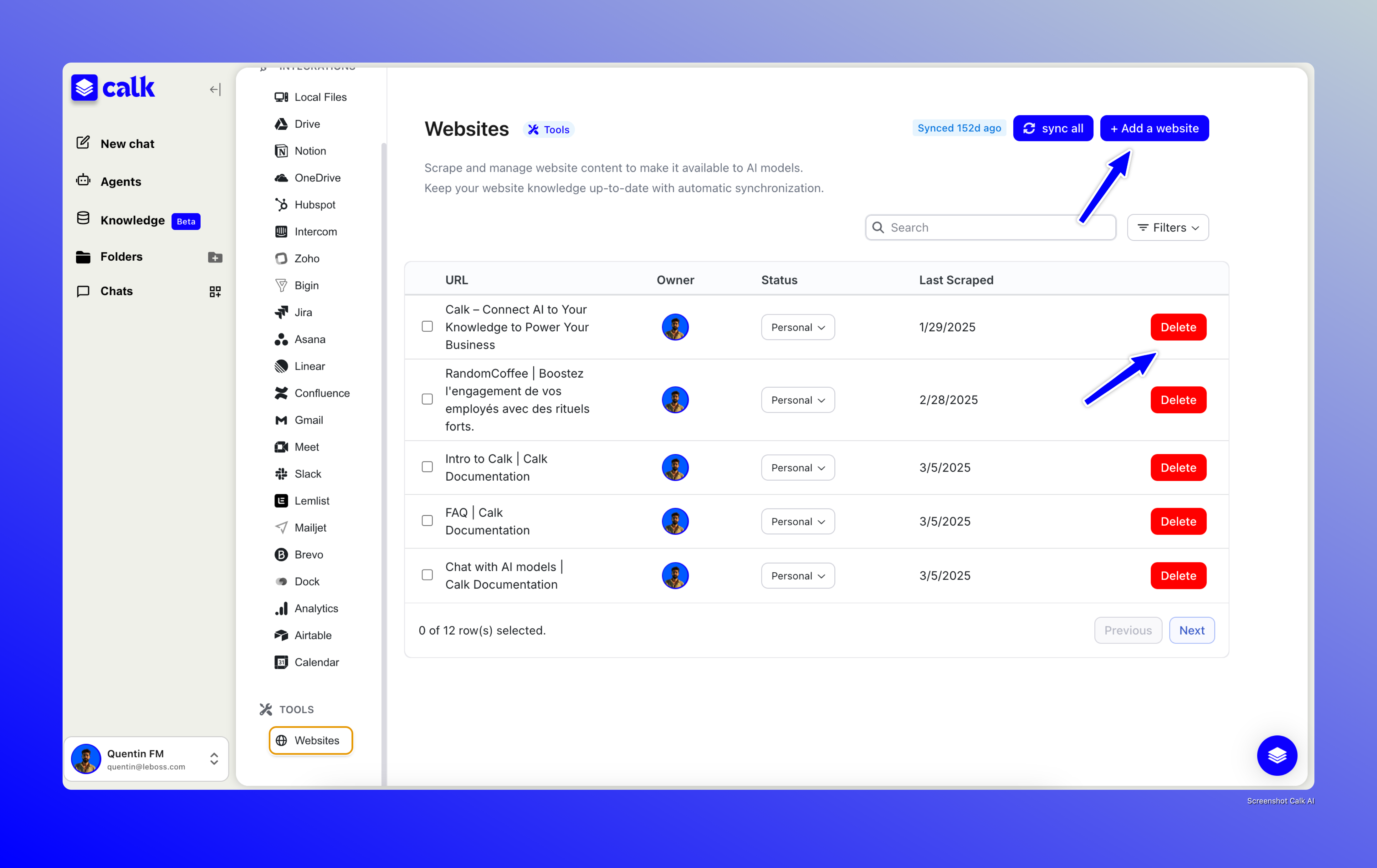
### Website Scraping
Add web content to your knowledge base by scraping websites and making them available to your agents.
**Adding Websites:**
1. Navigate to "Websites" in the sidebar under the Tools section
2. Click "+ Add a website" to add a new site
3. Enter the website URL you want to scrape
4. The system will automatically scrape and process the content
**Website Management:**
* **URL Tracking:** View all scraped websites with their URLs and status
###
{% hint style="success" %}
### Knowledge Best Practices
**Organization Tips:**
1. **Use Clear Naming:** Give files and imports descriptive names for easy identification
2. **Privacy Settings:** Use "Personal" for individual reference materials and "Public" for team resources
3. **Regular Maintenance:** Periodically review and remove outdated documents
4. **Sync Management:** Regularly sync connected integrations to keep information current
**Search and Discovery:**
* Use the search functionality across all knowledge sections
* Apply filters to quickly find specific types of content
* Organize content with consistent naming conventions
**Security Considerations:**
* Review privacy settings before making content "Public"
* Ensure you have proper permissions for uploaded and shared content
* Regularly audit access permissions for sensitive information
* Use integration-specific privacy controls when available
**Performance Optimization:**
* Remove duplicate or outdated files to improve search results
* Keep file sizes reasonable (under 20MB for local uploads)
* Use selective syncing for large integrations
* Monitor storage usage and clean up unnecessary content (you can monitor your storage in the analytics section of your account)
Your knowledge base serves as the foundation for your AI agents' capabilities. The more relevant, well-organized information you provide, the better your agents will perform across various tasks and queries`.`
{% endhint %}